Consider the whole installation
A display usually reports a setting or a sensor reading, not a complete picture of every shelf. Which compartment changed first is often more useful than a guess about the compressor.
Identify the Monogram appliance and any separate zones, cooking modes or cycle stages involved. Include whether the equipment is built in and whether access is restricted.
The appliance in its setting
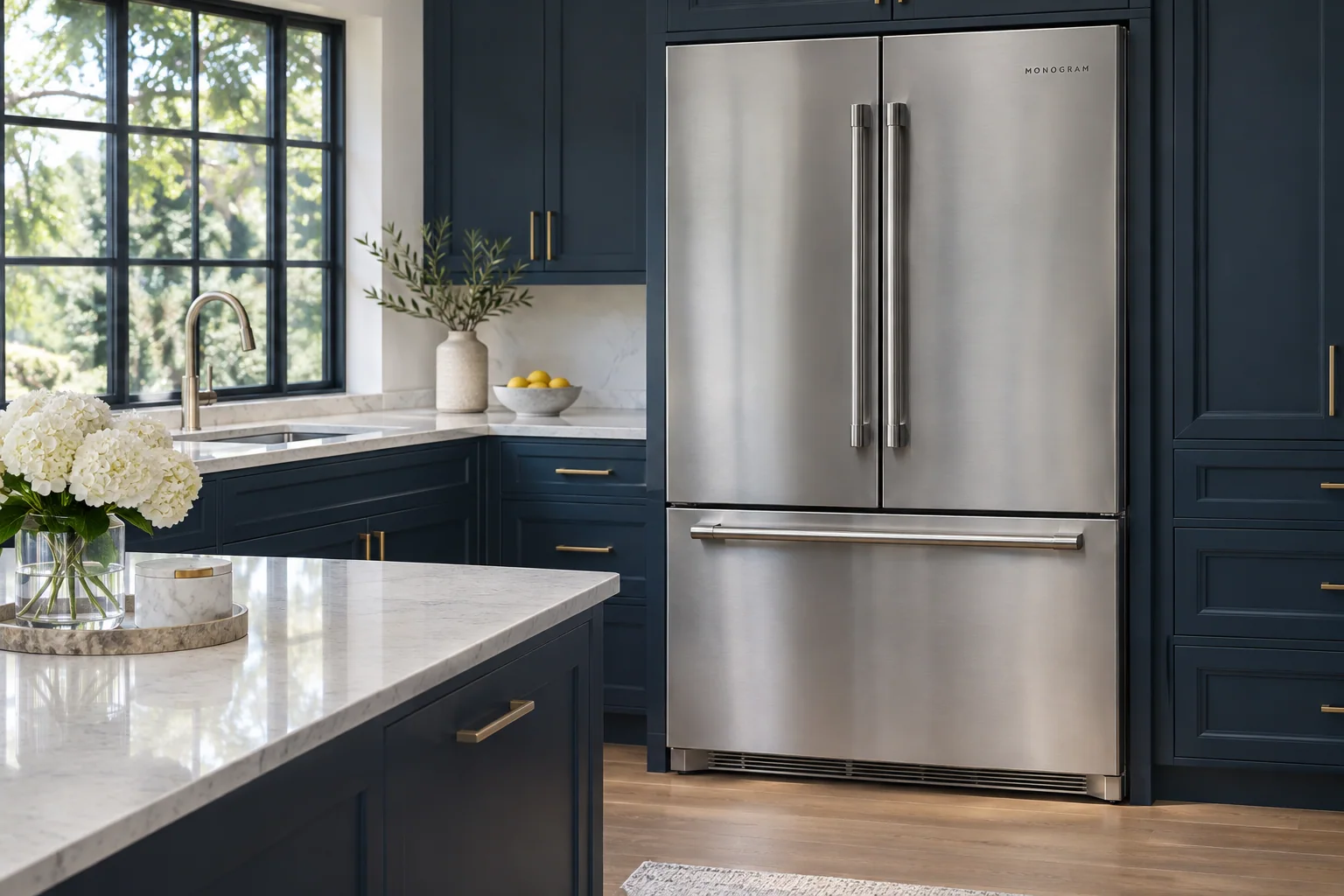
A built-in refrigerator is part of the surrounding cabinetry as well as a cooling system. Tell us about custom door panels, a tight side clearance or a water connection you cannot easily reach. If the concern is temperature, describe the food-storage area involved and how conditions changed over time. The display alone does not confirm the condition of every shelf.
Before the visit
Limit door openings and move temperature-sensitive food to suitable cold storage when cooling is unreliable. Keep vents clear without removing covers. Leave electrical and refrigerant work to a qualified technician.
Clear a safe working area, keep any displayed message and mention custom panels or restricted access. Do not dismantle the appliance in preparation.
What you may be noticing
The installation and the symptom belong in the same conversation. Describe the appliance’s configuration, any furniture panels and the function that changed. Leave fitted equipment in position until service access has been discussed.
- Fresh-food temperatures rising while the display still looks normal.
- Food freezing near a vent or on a particular shelf.
- Water collecting under drawers.
- A new fan or cycling sound.
- A door that needs extra pressure to close.
Diagnosis, approval and repair
The diagnostic/service call is $149, credited toward an approved repair. After diagnosis, you receive an itemized repair quote before work begins. Genuine OEM parts are used.
Availability, including same-day or emergency requests, depends on the address and schedule. Sending a request does not reserve an appointment.
The 1-Year Parts & Labor Warranty covers parts installed and labor performed under normal use. It excludes new unrelated faults, misuse, power surges and work performed by others after the visit.
Sealed-system and refrigerant work is performed by an EPA-certified technician. Manufacturer names identify equipment serviced; this is independent service.
What the inspection needs to establish
The technician adapts the inspection to the installation and reported behavior. These are areas to evaluate, not a list of parts to replace.
- Compare actual compartment behavior with the selected settings.
- Examine door alignment, gasket contact and accessible airflow paths.
- Check the fan, defrost, drainage and sensor systems relevant to the symptom.
- Evaluate electrical and sealed-system operation when the findings justify it.
A service visit with defined scope
Protect nearby finishes and clear the working area without dismantling equipment. Describe any fitted panels or difficult access while arranging service. The scope of a diagnostic visit is discussed for the actual appliance; multiple units should be listed individually.